Mount Huangshan in spring is like a maiden — all is new, fresh, and tender. After the silent solitude of winter, the mountain awakens with a gentle energy that no other season can match. While spring officially arrives in April at the mountain‘s base, here’s an old mountaineer‘s rule: for every 100 meters you ascend, spring is delayed by three days. So while wildflowers burst into brilliant color and seedlings shoot up at the foot, the plants halfway up the mountain are just stirring from their winter slumber, unwilling to reveal their full beauty until a week later. This staircase of seasons makes climbing Huangshan in spring a uniquely rewarding experience — every few hundred meters, you step into an earlier version of spring.
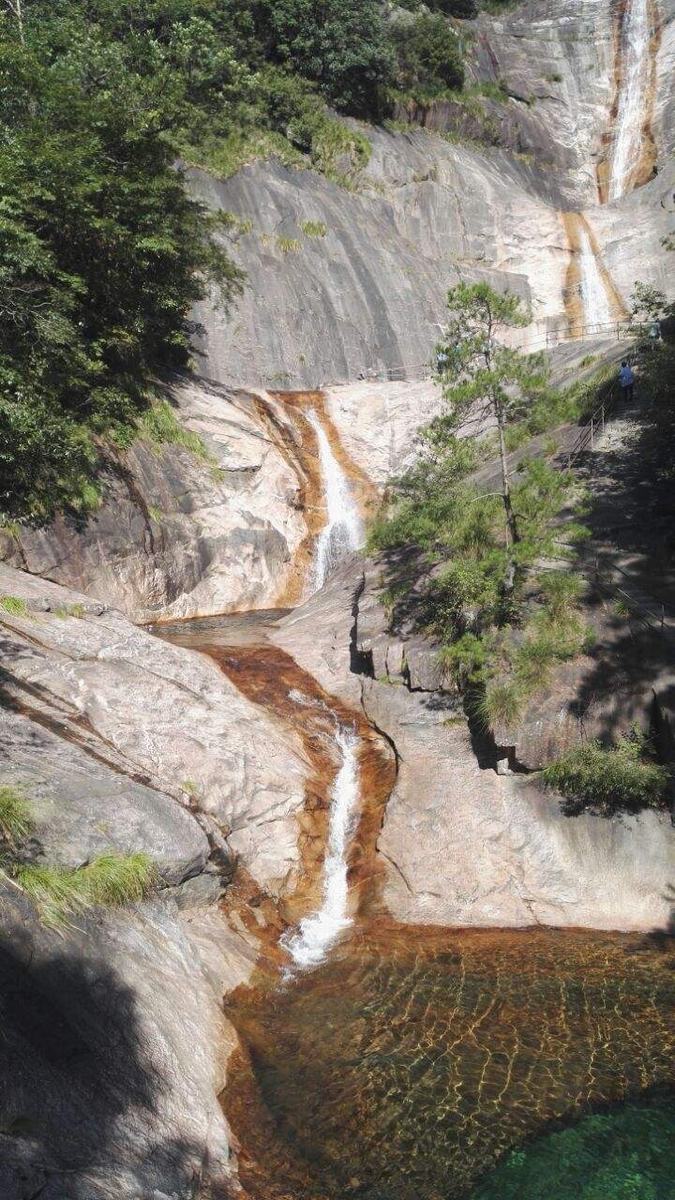
Spring is arguably the most propitious season for visiting Mount Huangshan, and it is certainly the best time to view the mountain‘s spectacular waterfalls, thanks to abundant rainfall that swells every stream and cascade.
Spring Weather & What to Expect
Spring on Huangshan runs from March to May, with average temperatures ranging from 10°C to 15°C (50°F to 59°F) at the summit — though the mountain foot and summit can differ significantly.
Monthly breakdown:
These figures are for the summit. At the base of the mountain, temperatures are considerably warmer — as much as 5–10°C higher — which explains why flowers bloom at the foot weeks before they appear on the peaks. The mountain‘s average temperature in spring hovers around 14°C (57°F), making daytime hikes comfortable and pleasant.
The weather in spring is mild but noticeably wetter than autumn, with rainfall increasing significantly in April and May. This extra moisture, however, is exactly what makes the waterfalls roar and the sea of clouds appear with astonishing frequency. The chance of witnessing a sea of clouds on Mount Huangshan from March to May is the highest of all four seasons — a remarkable 60% to 85% after rainfall.
The Splendor of Spring Flowers
Spring is the season when Huangshan bursts into color. The mountain‘s flora awakens in waves, each month bringing new blooms to different elevations.
March brings the first hints of color. From mid-March onward, wild magnolias (Magnolia cylindrica) begin flowering at Shixin Peak and Yupinglou, their white petals tinged with purple blooming before the leaves emerge, like white doves perched on bare branches. These are Huangshan magnolias — a rare wild plant named after its first discovery right here on the mountain. In late March, the hillsides from Beihai Scenic Area to the West Sea Grand Canyon become ribbons of pink, purple, and red as wild azaleas begin their colorful display. The trails on either side of Lion Peak to Shixin Peak are especially beautiful, where ancient pines intertwine with blossoms in a scene that locals describe as “pine as bones, flowers as the soul.”
April is the peak flowering month for Huangshan magnolias, which by then blanket sunny mountain slopes and valley sides at altitudes between 600 and 1,700 meters, their fragrant, orchid‑like scent carried on the breeze. By mid‑April, the first rhododendrons join the palette, with pink and pale white blossoms beginning to appear in higher zones.
May belongs to the Huangshan rhododendron (Rhododendron maculiferum ssp. anhweiense) — Anhui Province’s official flower and the city flower of Huangshan. Growing on rocky slopes above 1,200 meters, these blossoms transition through a remarkable color change, starting as deep red, softening to pink, and finally fading to white. The peak viewing window runs from late April through early May, perfectly coinciding with the season‘s highest sea of clouds probability.
The ancient Chinese verse captures it well: “Spring returns to flowers outside the mountains; spring begins in April among the peaks.” By May, the hillsides at lower elevations are already carpeted in rapeseed yellow, while the peaks above remain in the blush of rhododendron bloom — two springs at once.
Waterfalls at Their Most Magnificent
The abundant spring rainfall transforms Huangshan‘s waterways into thunderous spectacles. Three waterfalls are particularly famous:
• Renzi Waterfall — Named for its distinctive inverted “V” (人) shape, this cascade flows between Purple Cloud Peak and Cinnabar Peak. In spring, it rushes down as a pair of white dragons, striking the rock walls to create clouds of mist and spray that have earned it the ancient name “Flying Rain Spring” . The best viewing points are the Waterfall‑Viewing Pavilion and the Yuping Cableway station, and the water‘s roar is so powerful it can be heard long before it comes into view.
• Baizhang Spring — Located not far from Renzi, this waterfall plunges dramatically down a sheer cliff face. In spring it becomes a towering white ribbon that seems to fall straight from the clouds above.
• Jiulong Waterfall — The most spectacular of all, this nine‑tiered waterfall has a total drop of 300 meters, with each level cascading into the next. After spring rain, the full nine‑stage waterfall comes alive, thundering down into jade‑green pools below. Spring is without question the best season to visit, as the combination of rain and meltwater ensures the most powerful flow of the year.
If you have time, Emerald Valley — where Crouching Tiger, Hidden Dragon was filmed — is also home to dozens of smaller cascades and over a hundred shimmering pools. In spring, wildflowers line the valley walls, and the sound of rushing water accompanies you along every path.
Tip: The best time to experience any of these waterfalls is immediately after rainfall, when water flow is strongest and rainbows frequently form in the mist above the cascades.
Quiet Beauty of Spring Mornings & Bird Song
One of spring‘s quietest pleasures is the sound of bird song returning to the mountain after winter. In the stillness of early morning, before the crowds arrive, the valleys fill with birdsong — most pleasant in this quietude. As you climb your way up through different elevations, you will be enchanted by the subtle color changes of the emerging foliage: pale lime green at the foot, then deeper emerald higher up, with splashes of pink and white from the flowering trees along the way.
If you stay overnight on the mountain (highly recommended for spring), wake before dawn to walk the ridge paths in the half‑light. The air is cool and damp, the peaks still swathed in mist, and the first rays of sunrise set the sea of clouds ablaze in gold and rose. It is the kind of silence that fills the soul — broken only by the calls of birds and the distant rush of spring waterfalls.
Crowds & How to Avoid Them
Spring is moderately crowded, though nowhere near the overwhelming volumes of summer or the National Day holiday in October. However, there is one significant exception: Qingming Festival (Tomb‑Sweeping Day), which falls in early April. During the 2025 Qingming holiday, Huangshan Scenic Area received over 95,000 visitors in just three days — a 26% increase from the previous year — with the mountain approaching full capacity on some days.
Beyond the Qingming peak, spring sees steady but manageable visitor numbers. The weather is mild enough to encourage hikers without being so warm as to draw huge summer vacation crowds.
How to avoid crowds in spring:
What to Pack for Spring on Huangshan
Spring‘s weather is famously changeable — it is not uncommon to experience sunshine, fog, rain, and clearing skies all in the same day.
Packing checklist:
The mountain has over 200 foggy days a year, and spring brings frequent rain showers. A waterproof rain jacket is the single most important piece of gear — and again, leave the umbrella behind. High winds on exposed ridges can turn an umbrella into a sail, which is both useless and hazardous.
Final Advice
Spring in Huangshan rewards the prepared traveler. Book your accommodation well in advance if you plan to visit in early April (Qingming period) or on any weekend. Check the weather forecast before your trip — and look for days that say “rain followed by clearing.” These are the golden windows, when waterfalls are fullest, sea of clouds probability is highest, and the mountain reveals itself in all its freshly washed glory.
Pack layers. Start early. And when you stand on Shixin Peak with pink azaleas at your feet and a sea of clouds rolling beneath you, you will understand why the old saying holds true: “Trips to the Five Sacred Mountains render trips to other mountains unnecessary, and a trip to Huangshan renders trips to the Five Sacred Mountains unnecessary.”
Spring on Huangshan — when the mountain blushes and the waters roar — may just be the most beautiful version of all.