Huangshan Winter Guide
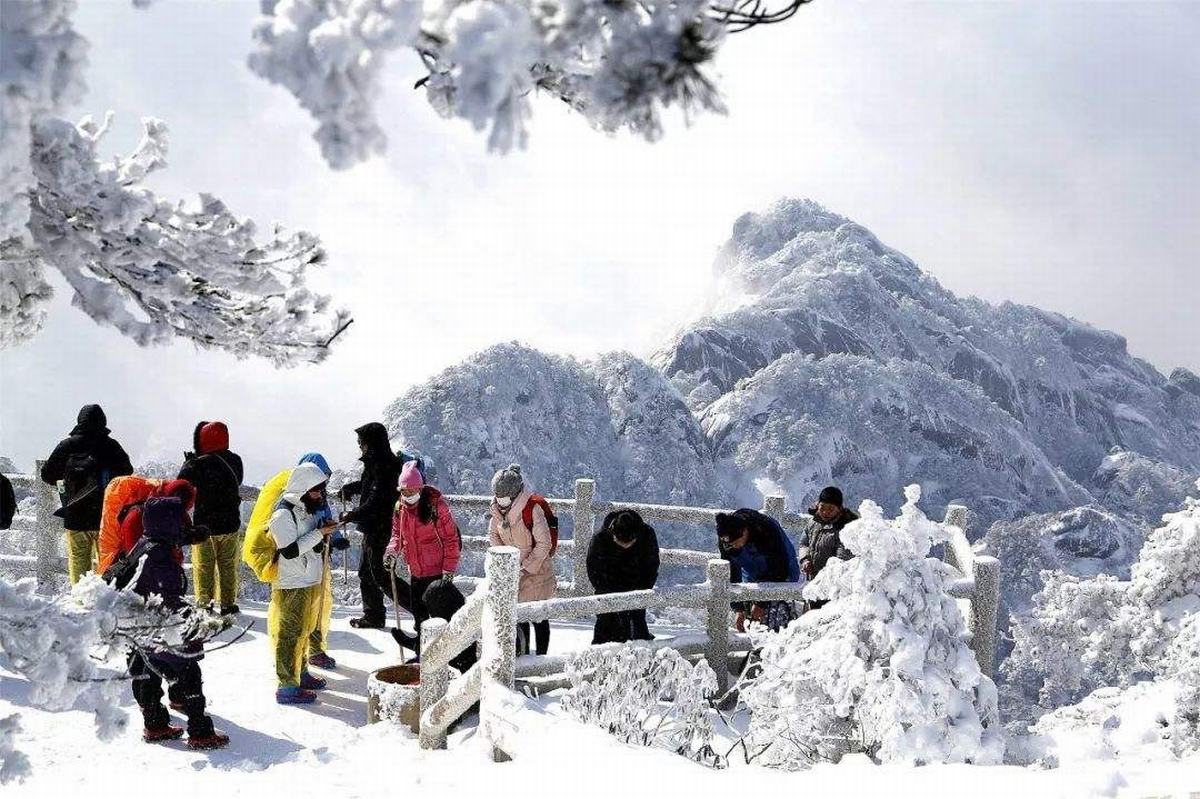
A poem has it that Mount Huangshan is beautiful all year round, but with the winter scenery being the best. Snowy Mount Huangshan (Yellow Mountain) transforms into a crystalline wonderland — icy peaks glisten under the sun, clusters of frosty coral-like rime trees sparkle, and a sea of clouds rolls through the valleys like a mythical ocean. The spectacle of rimed trees (known as song yin in Chinese), which occurs when freezing fog accumulates on branches, is the privilege of winter alone, offering a sight so rare and beautiful that many say one hasn‘t truly seen Huangshan until they’ve visited in winter.
Despite long winters on the mountain (typically from December to February), it‘s not as bitterly cold as you might imagine — though temperatures can dip sharply at night, especially after snow. And here’s the best news: winter is the most budget-friendly time to visit. Hotel rates and entry fees are reduced by 15% to 40% compared to peak season — except during the Chinese New Year (Spring Festival), when prices return to normal season levels and advance planning becomes absolutely essential.
* Seasonal Outlook: Winter 2026–2027 promises excellent rime and sea of clouds conditions. The first winter snow of the 2026 season arrived on January 20, 2026, bringing temperatures down to a bone-chilling -11°C— the coldest night of that season. This extreme cold triggered stunning rime formations across the mountain. With fewer tourists and lower prices, winter 2026 offers arguably the best value window for experiencing Huangshan‘s legendary scenery without the summer and autumn crowds.
Ticket, Cableway & Opening Hours — Winter 2026 Pricing
Huangshan operates on a seasonal pricing system with significant discounts in the off‑season (December to February). Note that opening hours are shorter in winter due to daylight constraints and colder conditions.
| Item | Off‑Peak (Winter) Rate | Notes |
|---|---|---|
| Entry Ticket | 150 RMB (full price); 75 RMB (half price for seniors 60+/students) | Valid for multiple entries within the same scenic area for a specified duration (reservation required) |
| Yungu / Yuping Cableway | 65 RMB one‑way | Peak season (Mar–Nov) prices: 80 RMB one‑way |
| Taiping Cableway | 65 RMB one‑way | Peak season price: 75 RMB one‑way |
| Yungu Cableway Winter Hours | 7:30 AM – 4:00 PM | Arrive early — last cable car down leaves at 4:00 PM, and late departures may find the service suspended due to weather |
| West Sea Grand Canyon Rail | Closed December–March | Also known as the “funicular” or “net‑red little train” — shut down entirely for winter maintenance |
| Hiking Entrances | 6:30 AM – 3:00 PM (non‑holiday) | Extended to 6:00 AM during the Spring Festival holiday window (late Jan‑Feb). Gate closes at 3:00 PM — no entry permitted afterwards |
Pro tip: The 150 RMB winter entrance ticket represents a 40 RMB (21%) savings over the peak‑season price of 190 RMB. Plus, cableway savings of 15 RMB per ride on Yungu / Yuping lines, and 10 RMB per ride on Taiping line, add up quickly. For two people taking both cableways up and down, the total winter savings on tickets and cableways alone can reach 110–120 RMB.
Winter Peak Closure Status — Important 2026 Update
This is the most critical information for planning any winter trip to Huangshan: several iconic peaks and areas close completely from December 1 through March for safety and ecological protection.
Currently closed during winter (December–March):
| Area | Closure Period | Notes |
|---|---|---|
| Tiandu Peak (Celestial Capital Peak / 天都峰) | December 1 – approximately early April | Third highest peak in Huangshan (1810m / 5,938 ft), closed for winter safety and trail maintenance. In 2026, it reopened on April 7 — not available for winter visitors. ⚠️ Many older online posts still advise hiking Tiandu Peak in winter; they‘re outdated — official policy now strictly prohibits access due to safety concerns and ecological protection measures |
| West Sea Grand Canyon + Funicular Rail | December 1 – approximately mid‑March | The canyon’s famous “net‑red little train” funicular stops operations entirely. The gorge itself is inaccessible — canyon trails and the plank walkway along the cliff face close due to icing risks. In 2026, the canyon reopened on March 14 |
| West Gate (Xidamen) | December 1 – March | Synchronized with canyon closure |
| Lotus Peak | Closed throughout all of 2026 | Not winter-specific — this highest peak (1864.8m / 6,117 ft) remains under a multi‑year ecological rotation closure. The rotation system alternates access to Lotus Peak and Tiandu Peak on a 5‑year cycle. Currently, Tiandu Peak is scheduled to reopen in 2026 (April 7), while Lotus Peak remains closed, in contrast to some earlier online information that may have incorrectly suggested otherwise |
What this means for your winter itinerary:
• You can still hike to Bright Summit (1860m), the second‑highest peak and arguably the best viewpoint in winter — wide‑open 360° panorama without Tiandu/Lotus restrictions
• For the “climbing peaks” experience, focus on Shixin Peak (Beginning‑to‑Believe Peak), Lion Peak, Paiyun Pavilion, and Bright Summit — all remain fully accessible
• Rather than mourning the closures, use this as an opportunity to explore less crowded routes and focus on winter-specific wonders: rime ice, sea of clouds (which appears more often in winter than any other season), and snow‑clad strange pines
• If you‘re determined to see West Sea Grand Canyon, plan your trip for mid‑March onward, when the canyon is typically among the first areas to reopen after winter maintenance ends
Winter Weather & Temperatures — What to Expect
| Month | Average Daytime High (Summit) | Average Nighttime Low (Summit) | Daytime High (Mountain Base) | Notes |
|---|---|---|---|---|
| December | ~3–6°C (37–43°F) | ~ -2°C to -5°C (28–23°F) | ~9–11°C (48–52°F) | Snow begins, relatively dry, less extreme winds |
| January (coldest) | ~1–3°C (34–37°F) | ~ -5°C to -11°C (23–12°F) | ~7–9°C (45–48°F) | Coldest month of the year — temperatures on the summit in extreme cold events can drop to -11°C, as recorded on January 19–20, 2026, triggering blue‑cold warnings. Expect the most frequent and heaviest snowfall |
| February | ~4–7°C (39–45°F) | ~ -3°C to -6°C (27–21°F) | ~9–12°C (48–54°F) | Slightly warmer, but persistent rain and snow remain common, particularly early in the month |
Key winter weather facts:
• Huangshan is foggy nearly 200 days a year — many visitors miss the sunrise due to cloud cover. Winter, however, has fewer rainy days than other seasons, so the probability of seeing sunrise (and the sea of clouds) is much higher
• Wind chill on exposed peaks (especially at Bright Summit and Lion Peak) can make it feel 5–10°C colder than the actual temperature — pack windproof layers accordingly
• The mountain base is significantly warmer (4–6°C / 7–11°F higher) than the summit. This means snowfall can be heavy at the top while the base remains merely cold and wet — trails from the base upward transition through multiple microclimates
• Snowfall is not guaranteed every day — check the official Huangshan Meteorological Observatory forecast (available via their Weibo account, published every 3 hours during winter) in the days before your trip. The highest probability occurs when a cold front arrives after a period of mild, moist conditions
The Magic of Rime Ice (Rime) — Winter’s Exclusive Wonder
Rime ice, also known as song yin or “ice crystals on trees,” occurs when super‑cooled water droplets in freezing fog freeze instantly on contact with pine needles, rocks, and every exposed surface. The result is a silver world: clusters of frosty corals on every branch, shimmering in the sunlight like a scene straight out of a frozen fairy tale.
Best rime viewing spots:
| Viewing Spot | Why It‘s Good | Best Time |
|---|---|---|
| Shixin Peak (Beginning‑to‑Believe Peak) | Famous for breathtaking rime coverage on ancient pines — many consider this the “classic” rime photo location | December – January (peak rime season) |
| West Sea Grand Canyon | Though the canyon floor is closed in winter, the view from the canyon rim (accessible via trails up to the closure points) offers breathtaking rime on canyon-facing slopes; spectacular with morning light | Early morning |
| Lion Peak | Rime combines with one of the best sunrise vantage points on the mountain — often photographed together | Sunrise hours |
| Paiyun Pavilion | Located at the rim of West Sea Grand Canyon — offers rime‑covered pines framed by clouds rising from the canyon below | Morning |
| Bright Summit | 360° views of rime‑covered peaks extending to the horizon — particularly spectacular in morning and late‑afternoon light | Morning or late afternoon |
*Expert tip: Rime looks its absolute best within 1–2 hours after sunrise, when the low‑angle light hits the ice crystals from the side, making them glitter like diamonds. By mid‑day, the light flattens out, and the ice‘s sparkle diminishes significantly. Plan for an early start: aim to reach your chosen viewing spot by 6:30–7:00 AM.
Sea of Clouds in Winter — Highest Probability of the Year
The sea of clouds (one of Huangshan‘s four wonders) appears more often in winter than in any other season. When cold air settles into the valleys while warm, moist air rises from the surrounding rivers, it creates a perfect inversion layer, trapping clouds below the peaks.
| Viewing Spot | Altitude (m) | Best Time | Why It’s Great |
|---|---|---|---|
| Bright Summit | 1,860 | 5:30–7:00 AM / 3:00–5:00 PM | 360° panoramic view — the single best sea of clouds location on the mountain. In winter, it‘s less crowded (most day‑trippers don’t arrive until later), giving you a peaceful, meditative experience with just a handful of early risers |
| Shixin Peak | ~1,680 | Early morning after snow | Rime ice + sea of clouds + golden sunrise light combine for the classic Huangshan winter composition |
| Paiyun Pavilion | ~1,600 | Late afternoon | Overlooks West Sea Grand Canyon — clouds pour over the canyon rim like a waterfall of vapor, creating a “cloud avalanche” effect |
| Lion Peak | ~1,690 | Sunrise | Iconic “Monkey Watching the Sea” rock formation silhouetted against the clouds |
| Yupinglou (Jade Screen Pavilion) | ~1,700 | 6:00–8:00 AM | Welcoming Pine (Greeting Guests Pine) framed by sea of clouds — the most photographed winter scene in Huangshan |
Winter sea of clouds probability — by the numbers:
• Average occurrence: approximately 50 days per year
• Winter probability: significantly higher than any other season — after fresh snow followed by clearing skies, probability approaches 80%
• 2026–2027 winter outlook: The extreme cold event on January 19–20, 2026 (-11°C summit) triggered exceptional inversion conditions, producing sea of clouds views rated by visitors as “legendary”
• Best conditions: Look for the day after a cold front passes, after snow has fallen, followed by clearing skies and light winds. The classic pattern: snowfall overnight → clearing skies before dawn → spectacular sea of clouds sunrise
Sunrise & Sunset in Winter — Timing Guide
Winter offers the highest probability of clear skies for sunrise viewing in all of Huangshan, since the mountain is less foggy than in other seasons. The best sunrise viewing spots (Dawn Pavilion (also known as Qingliang Terrace), Refreshing Terrace, Lion Peak, Bright Summit, Shixin Peak, White Goose Ridge (also known as Bai‘e Ling / Jingpavilion), Jade Screen Peak, Lotus Peak, and Celestial Peak) are chosen based on your hotel location — hotel staff update sunrise times daily, making it easy to plan your early morning trek.
Sunrise & sunset times for 2026–2027:
| Date | Sunrise Time | Sunset Time |
|---|---|---|
| December 1, 2026 | ~6:50 AM | ~5:05 PM |
| December 21, 2026 (Winter Solstice) | ~7:02 AM | ~5:08 PM |
| January 1, 2027 | ~7:04 AM – 7:05 AM | ~5:18 PM |
| February 1, 2027 | ~7:00 AM | ~5:44 PM |
Practical tips for sunrise hunting:
• Depart at least 1 hour before sunrise to reach your chosen viewing spot safely. Trails are well‑lit along both sides — even in complete darkness, you won‘t need to worry about safety, as step‑lights illuminate the main paths
• Ice hazards are real. Although workers clean the paths daily — and even after snowfall, they clear snow promptly — black ice can still form on shaded sections and stone steps. A pair of non‑slip hiking shoes are not just a recommendation — they are a necessity. Most summit hotels provide free anti‑skid shoes and heavy coats for guests to use when going out for sunrise and sunset — ask at the front desk the evening before
• Bring windproof hats and gloves on your own as a backup — wind chill at Lion Peak and Bright Summit can be severe, especially before dawn
• Prepare for darkness. During particularly long winter nights, mountain staff may not patrol unlit service roads. A headlamp or small flashlight is strongly recommended for the early morning walk to viewing platforms
• Don‘t assume “lights everywhere.” While the official statement that “there are lights along both sides of the paths” is broadly true for main trails, some side paths to viewing platforms have minimal lighting. A headlamp offers peace of mind and safety
What to Pack — Essential Winter Gear
The key phrase is layering. You’ll shed layers as you hike upward and add them back at exposed summits, especially when waiting 30–60 minutes before sunrise.
Packing checklist:
| Category | Items |
|---|---|
| Base layer | Moisture‑wicking thermal underwear (wool or synthetic — avoid cotton, which becomes freezing when wet) |
| Mid layer | Fleece jacket or lightweight down jacket (800+ fill power recommended) |
| Outer layer | Windproof, waterproof jacket with hood — essential for blocking wind at exposed peaks like Bright Summit. Do not rely on an umbrella. Strong winter winds render umbrellas useless and potentially dangerous (acting like a sail) |
| Footwear | Waterproof, non‑slip hiking boots with deep tread patterns |
| Ice traction | Anti‑slip crampons — available for rent at the mountain base (approx. 10–50 RMB per pair depending on quality). Highly recommended if hiking after snowfall. Paths with black ice are common even after clearing |
| Accessories | Thick beanie/warm hat, windproof neck gaiter or scarf with a lanyard (prevents loss on windy ridges), touchscreen‑compatible warm gloves, sunglasses (sun reflects brightly off snow) |
| Essentials | Large‑capacity power bank (phone batteries drain rapidly in cold temperatures); insulated stainless steel thermos (hot water available on the mountain at rest stations and hotels); headlamp or small flashlight; high‑calorie snacks (energy bars, nuts, chocolate) |
| Optional but helpful | Trekking poles with ice tips (available for rent at base); hand warmers (stick to back of phone to prevent battery death); hand warmer packs for pockets |
| Documents | Passport or ID, printed hotel booking confirmations, and—if arriving during the Spring Festival period—printed tickets or reservation screenshots in case of network issues |
* Critical warning:
• Temperatures can drop to -11°C (12°F) on the summit. This is not just “a little cold” — at this temperature, exposed skin can experience frostbite within 30 minutes under windy conditions. Full face coverage (balaclava or tightly wrapped scarf) is necessary on the coldest days
• Phone batteries will die quickly in -10°C if not kept warm. Keep your phone in an inner jacket pocket close to your body; use hand warmers taped to the back of the phone case if necessary; carry a power bank for emergency recharging
Winter Safety — What the Mountain Does for You
Workers clean the paths every day. Even after a heavy snowfall, a coordinated cleanup system kicks in: the transportation department begins plowing from 5:00 AM, conducting road inspections every two hours, and spreads de‑icing salt across key trails. In 2026‘s January 20 storm, crews applied 1 ton of salt, deployed 30 personnel, and operated 12 snow‑clearing vehicles — all before the first cable car started running. Vehicles are fueled with -10°C diesel to prevent freezing, and all shuttle buses are equipped with anti‑skid chains before departure.
Despite these efforts, you are responsible for your own safety. Black ice can still hide beneath fresh snow. Always test your footing before committing your full weight.
Additional safety notes:
• Do not climb during thunderstorms. Thunderstorms can develop suddenly in winter as well, particularly in early December or late February. Avoid exposed peaks (Lion Peak, Bright Summit) if thunder is audible
• Cable cars may suspend operations during severe winter weather (heavy snow, high winds, or icing on cables). Always check the official “Huangshan Tourism Official Platform” WeChat mini‑program for real‑time operational status before heading to the cable car station
Accommodation — Where to Stay
Summit hotels are centrally heated, so you don’t have to worry about freezing at night — the warmth inside will be comfortable. These hotels provide free hot drinks (in 2026‘s January storm, hotels served complimentary hot ginger tea to guests), anti‑skid shoes, and heavy coats for sunrise viewing.
| Hotel | Advantages | Price Range (Winter) |
|---|---|---|
| Baiyun Hotel | Central location, easy access to Bright Summit and multiple route options — excellent for first‑time winter visitors | ~500–800 RMB |
| Xihai Hotel (West Sea Hotel) | Closest to West Sea Grand Canyon rim and Paiyun Pavilion — best for photographers aiming for canyon shots | ~600–900 RMB |
| Beihai Hotel | High cost‑performance ratio — near Lion Peak and Shixin Peak for sunrise viewing | ~400–700 RMB |
| Yupinglou Hotel | Next to the Welcoming Pine — spectacular for sunrise photography but higher priced | ~800–1200 RMB |
| Paiyunxing Inn | Newly opened (2025/2026) — modern facilities, competitive pricing | ~450–650 RMB |
| Bright Summit Lodge | Highest of all summit accommodations — literally at the summit itself, offering the shortest walk to the viewing platform | ~600–900 RMB |
Booking advice:
• Book summit accommodation at least 15 days in advance (1 month if visiting during the Spring Festival holiday)
• Spring Festival (Chinese New Year) prices and availability are comparable to peak season — book even earlier (minimum 30 days)
• Hotels at the mountain base in Tangkou Town (a 10‑minute walk from the South Gate shuttle center) offer floor‑heating facilities in some guesthouses — more affordable alternative if summit hotels are fully booked
Elderly Visitors & Easy Access Routes
Elderly visitors and those with mobility concerns can enjoy the mountain via cable cars. For those still desiring some hiking, you can climb step by step, crossing the Walking Fairyland Bridge area or the accessible sections near the West Sea Grand Canyon rim (but not the canyon floor, which is closed).
For safety reasons, in winter conditions with ice on trails, it is safer to climb by cable car rather than attempting a full ascent on foot. The steep stone steps — particularly on the front mountain from Yuping Cableway station to Bright Summit — become extremely slick and dangerous when iced, even with crampons. The Yungu Cableway route on the back mountain is generally easier in winter because it has more gradual slopes and less exposure to wind.
Recommended easy winter route:
Yungu Cableway (Back Mountain, gentler slopes) → White Goose Ridge (Bai‘e Ling) → Shixin Peak → Beihai Scenic Area → Bright Summit — this route minimizes steep ascents and has the best‑maintained winter trails
Winter Photography Tips
Taking photos in Mount Huangshan in winter differs from other places — not just because of the cold, but because of the unique lighting conditions.
Essentials for winter photography:
• Protect your gear: Keep spare batteries in an inner pocket, as cold kills battery life. Rotate between batteries to keep them warm
• Watch where you stand — especially on narrow paths where snow may hide the edge. Some of the most dramatic shots require stepping to the edge, but ice makes this dangerous. Do not compromise safety for a photo
• Best shooting times:
○ Golden hour after sunrise (approx. 7:00–8:30 AM in winter) — soft, warm light on white snow creates the classic Huangshan winter palette
○ Blue hour before sunrise (approx. 6:00–6:50 AM) — captures the ethereal glow of the sea of clouds with the sky still dark, great for long‑exposure shots
○ Late afternoon (3:00–4:30 PM) — dramatic sidelight highlights the texture of rime ice on the pines
•Camera settings: Use a polarizing filter to reduce glare from snow, and bracket exposures because the contrast between bright snow and dark rock faces is extreme. Aperture priority mode (f/8–f/11) works well for landscape shots. Increase exposure compensation by +0.7 to +1.0 to keep snow looking white rather than gray
Recommended photo spots by shot type:
| Shot Type | Best Location | Best Time |
|---|---|---|
| Rime on pines | Shixin Peak | Morning (7:00–9:00 AM) |
| Sea of clouds | Bright Summit | Sunrise (6:30–7:30 AM) or late afternoon (3:00–4:00 PM) |
| Sunrise silhouettes | Lion Peak | 15–20 minutes before sunrise |
| Welcoming Pine with clouds | Yupinglou | Early morning after snow |
| Canyon clouds | Paiyun Pavilion | Late afternoon (3:30–5:00 PM) |
| Ice‑covered stone steps | Any shaded north‑facing trail | Morning (before snow melts) |
Summary — Why Winter?
Winter is the most economical time for visiting Huangshan, with hotel and entry fee prices lowered by 15–40% compared to peak season. The sea of clouds appears more frequently than in any other season. The spectacle of rimed trees sparkling in the sun is exclusive to winter — a silver world with icy peaks, clusters of frosty corals suffused with the freshest oxygen‑rich air.
Add to this the higher probability of clear sunrise views (because winter has fewer rainy days) and the significantly reduced crowds (outside of Spring Festival week), and winter emerges as arguably the best season for experiencing Huangshan at its most magical — and at its most affordable.
Just remember: bring crampons, layer up, book early, avoid the National Day period (October) entirely for winter prep, and — most importantly — check the official closure status of Tiandu Peak and West Sea Grand Canyon before you go. With those basics covered, a winter visit to Huangshan will reward you with memories that no other season can match.


More Recommend
- Huangshan Sunset Guide
- Huangshan Sunrise Guide
- Huangshan North Railway Station
- How to Get to Huangshan
- Hangzhou to Huangshan High Speed Train
- Huangshan Festivals and Events
- Huangshan Summit Hotels Guide
- How to Get from Shanghai to Huangshan
- Huangshan to Shanghai High Speed Train
- Shanghai to Huangshan High Speed Train


