Climate & Weather in Mount Huangshan
Mount Huangshan (Yellow Mountain) is a UNESCO World Heritage Site renowned for its dramatic granite peaks, ancient pines, and ethereal sea of clouds. Understanding its unique mountain climate is the first step toward a successful visit. This guide provides up‑to‑date information on temperatures, precipitation, seasonal weather patterns, and packing essentials to help you plan your trip.
1. Overview: A Humid Subtropical Monsoon Climate
Mount Huangshan lies in a humid subtropical monsoon climate zone (Köppen: Cfa) with four distinct seasons. However, the mountain’s steep topography creates a vertical climate where conditions change dramatically with altitude.
| Parameter | Value / Range |
|---|---|
| Annual Mean Temperature (Scenic Area / Bright Summit) | 7.8°C (46.0°F) |
| Annual Mean Temperature (Huangshan City / Base Area) | approx. 15–17°C (59–63°F) |
| Summit–Base Temperature Difference | 8–10°C (14–18°F) cooler on the summit year‑round |
| Summer Summit Difference | 10–15°C cooler than base |
| Winter Summit Difference | 20–25°C cooler than base |
| Annual Precipitation | 2,348–2,398.5 mm (92–94 inches) |
| Annual Foggy / Cloudy Days | 256 days/year (70% of the year) |
| Annual Rainy Days (≥1 mm) | approx. 183 days |
| Annual Snowy Days | approx. 49 days |
| Annual Rime Ice Days | 62–63 days on average |
| Annual Sunshine Hours | 1,600+ hours |
Crucial distinction: The annual mean temperature of 7.8°C refers to the summit area (Bright Summit at 1,840 m). The base of the mountain in Tangkou Town is considerably warmer, with an annual mean of roughly 15–17°C. Plan your clothing accordingly — what works at the base will be completely inadequate at the summit.
2. Monthly Temperature Breakdown (Summit / Scenic Area)
The data below is derived from long-term averages at higher elevations within the Huangshan Scenic Area, approximating conditions at the summit. Remember: actual felt temperatures can be 5–10°C colder on exposed peaks due to wind chill, especially at sunrise.
| Month | Avg. Temp (°C / °F) | Avg. High (°C) | Avg. Low (°C) | Rainfall (mm) |
|---|---|---|---|---|
| January | -3.0°C / 27°F | 0.6°C | -6.2°C | 70–90 |
| February | -1.6°C / 29°F | 2.0°C | -4.8°C | 100–130 |
| March | 2.6°C / 37°F | 6.2°C | -0.6°C | 140–170 |
| April | 7.8°C / 46°F | 11.3°C | 4.7°C | 180–220 |
| May | 11.7°C / 53°F | 14.9°C | 9.1°C | 230–260 |
| June | 14.8°C / 59°F | 17.8°C | 12.5°C | 280–320 |
| July | 17.6°C / 64°F | 20.5°C | 15.3°C | 300–350 |
| August | 17.4°C / 63°F | 20.5°C | 15.3°C | 250–300 |
| September | 13.8°C / 57°F | 16.9°C | 11.5°C | 150–180 |
| October | 8.8°C / 48°F | 12.1°C | 6.2°C | 80–110 |
| November | 4.1°C / 39°F | 7.4°C | 1.1°C | 70–90 |
| December | -0.8°C / 31°F | 2.6°C | -4.0°C | 50–70 |
Note: Table derived from historical averages for the Huangshan summit region, with rainfall estimates from past decade data as cited. Actual current-year values may vary slightly.
3. Four Seasons in Detail: What Each Season Offers
Spring (March – May) – Awakening Beauty & Blooming Flowers
Spring arrives late on Huangshan. For every 100 meters of elevation gain, spring is delayed by roughly three days — so while wildflowers bloom at the base in March, the summit may not see green shoots until mid‑April. April and May are the most beautiful months, with azaleas and wild magnolias blooming across the mountainside.
| Parameter | Value |
|---|---|
| Avg. Summit Temperature (Mar–May) | 2.6°C – 11.7°C (37–53°F) |
| Sea of Clouds Probability | Very high (60–85% after rain) |
| Weather Patterns | Misty, cloudy, frequent drizzle, occasional fog, moderate rainfall |
| Key Highlights | Blooming azaleas (mid‑April onward), wild magnolias, lush greenery, high chance of sea of clouds after rain |
| Crowd Level | Moderate (peak during Qingming holiday, early April) |
| Packing Essentials | Waterproof raincoat (not an umbrella), layers, non‑slip hiking shoes, warm jacket for summit |
Spring is one of the most rewarding seasons for photographers. The contrast between blooming flowers and the dark granite peaks — often partially shrouded in mist — creates classic Chinese ink‑wash painting compositions.
Summer (June – August) – Green Paradise & Natural Air Conditioning
Summer transforms Huangshan into a verdant wonderland. The summit stays refreshingly cool while the base bakes in the heat — truly nature‘s own air conditioning.
| Parameter | Value |
|---|---|
| Avg. Summit Temperature | 14.8°C – 17.6°C (59–64°F) |
| Summit–Base Difference | 10–15°C cooler on top |
| Weather Patterns | Humid, frequent afternoon showers, plum rain season (mid‑June to mid‑July), occasional thunderstorms |
| Key Highlights | Lush green landscapes, spectacular waterfalls, high chance of sea of clouds especially after rain (June sea of clouds probability can reach 80–90% after storms), long daylight hours (sunrise ~5:10 AM, sunset ~7:20 PM in June) |
| Crowd Level | High (July–August peak holidays; June surprisingly quieter as rainy season deters casual travelers) |
| Packing Essentials | Lightweight breathable clothing, waterproof raincoat (essential), sun hat, sunscreen (UV index can be high at altitude), light jacket for summit evenings |
Insider tip: June is a hidden gem. The plum rain season brings high humidity and frequent showers — but when the rain stops, the clouds rise from the valleys, creating some of the most dramatic sea of clouds displays of the year. June offers far fewer crowds than July–August, with significantly lower hotel prices and shorter cable car queues.
Autumn (September – November) – Golden Season for Clear Skies
Autumn is widely considered the best season to visit Huangshan. The skies are clearer, the air is crisp, and the foliage transforms into a spectacular palette of gold, orange, and red. October is particularly stunning — the mountainsides appear “dyed in layers” of vibrant fall colors.
| Parameter | Value |
|---|---|
| Avg. Summit Temperature (Sep–Nov) | 4.1°C – 13.8°C (39–57°F) |
| Weather Patterns | Cool, dry, clear skies, minimal rainfall, excellent visibility |
| Key Highlights | Spectacular autumn foliage (October peak), highest probability of clear skies and unobstructed views, comfortable hiking temperatures, sea of clouds still frequent (up to 60%) |
| Crowd Level | Moderate to High (peak during National Day holiday, Oct 1–7 — avoid this week if possible) |
| Packing Essentials | Layers (warm days, cool evenings), windbreaker, comfortable hiking shoes, camera (autumn light is exceptional for photography) |
Autumn offers the best conditions for sunrise and sunset photography. The atmosphere has the highest transparency of the year, making sunrise silhouettes particularly sharp and colors remarkably saturated. The golden hour light filtering through the canyon‘s red leaves creates a cinematic quality of light and shadow that’s hard to find in any other season.
Winter (December – February) – Rime Ice Wonderland & Budget Savings
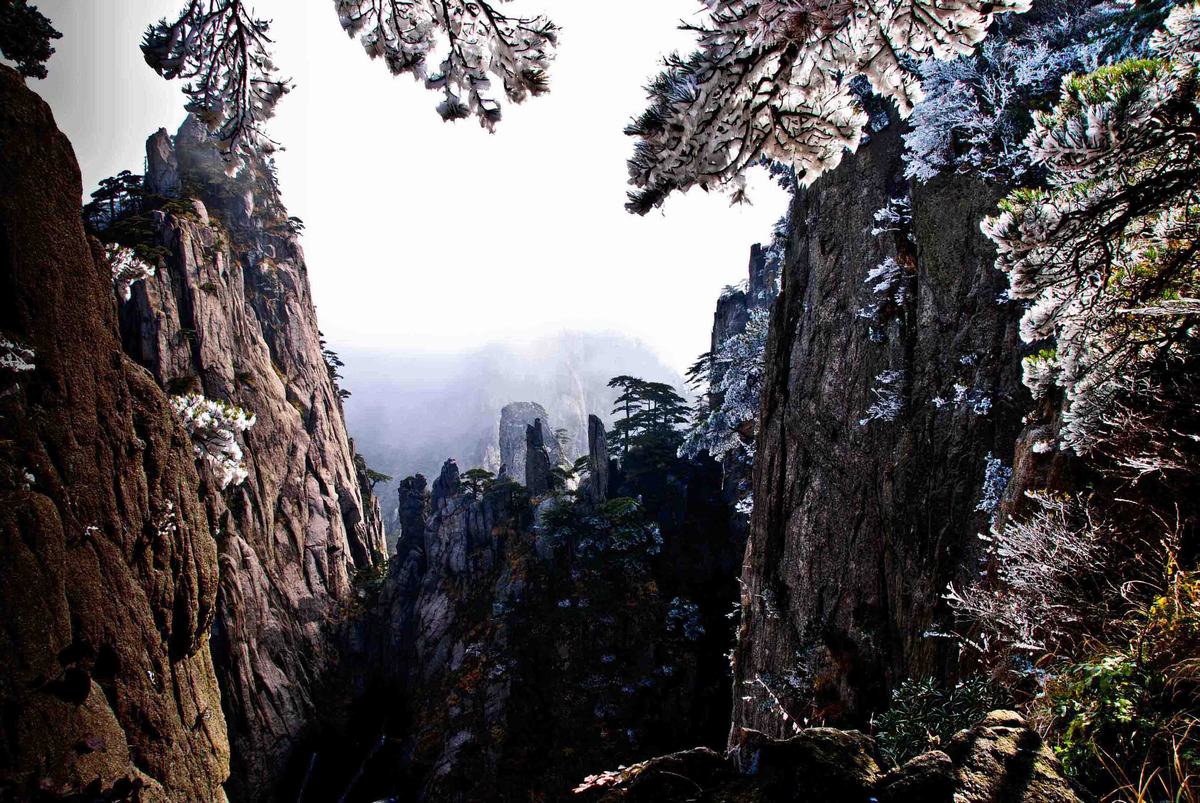
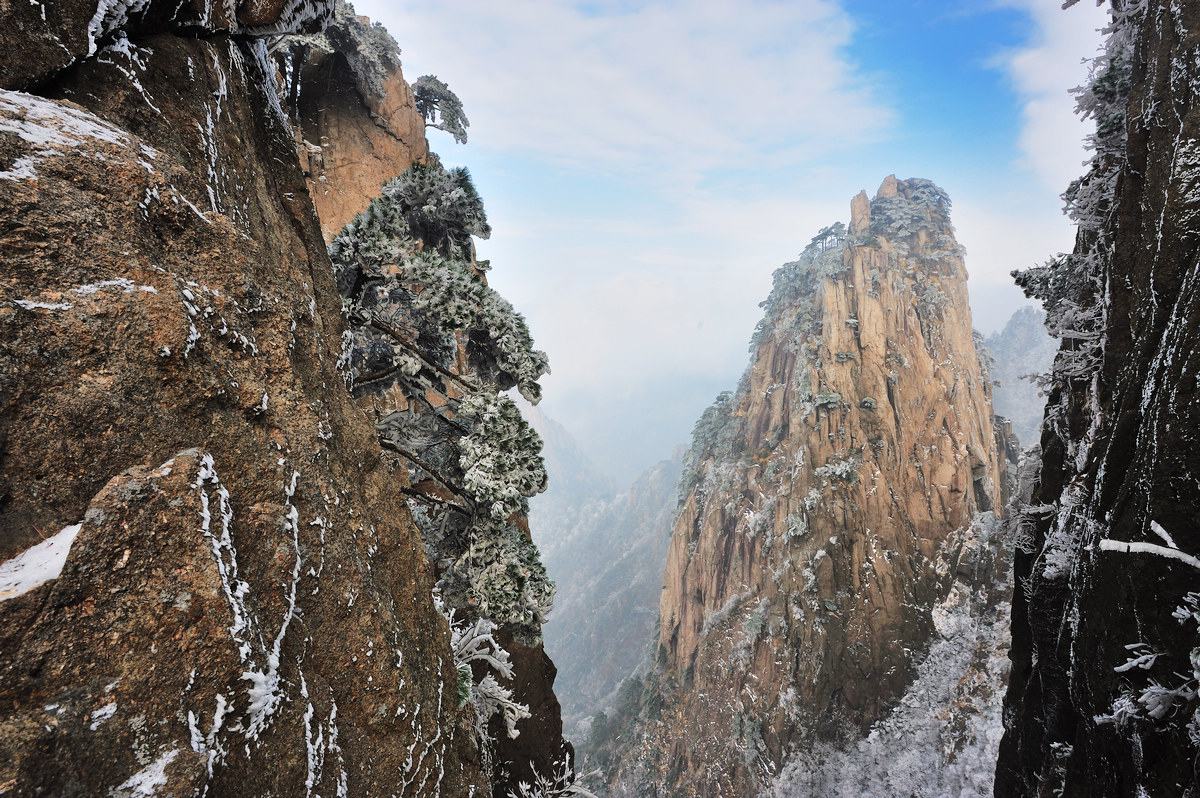
Winter on Huangshan is a magical experience — and surprisingly, not as bitterly cold as many travelers imagine (thanks to low humidity). The real attraction is rime ice, a phenomenon where freezing fog coats every pine needle and rock in shimmering crystals.
| Parameter | Value |
|---|---|
| Avg. Summit Temperature (Dec–Feb) | -3.0°C – -0.8°C (27–31°F) |
| Average Low (Night) | down to -6°C (21°F) at night, occasionally as low as -11°C in extreme cold waves (recorded Jan 2026) |
| Weather Patterns | Cold, dry, frequent clear days after snow, low precipitation |
| Key Highlights | Rime ice (December–February, peak in late January), snow‑covered peaks, lowest crowds of the year (except Chinese New Year week), significantly lower prices (entry ticket drops to 150 RMB, hotels 20‑40% cheaper) |
| Crowd Level | Low (except Chinese New Year holiday, typically late January or February — avoid if possible) |
| Special Closure | West Sea Grand Canyon: closed December – mid‑March; Tiandu Peak: closed for winter |
| Packing Essentials | Thermal base layers, down jacket, windproof outer shell, insulated hat & gloves, crampons (essential for icy paths), warm hiking boots, power bank (batteries drain fast in cold), hand warmers |
Rime ice details: Yellow Mountain rime ice forms on average 63 days each year, usually between December and February, with the peak period from late January to early February. It forms when temperatures drop below -2°C and humidity exceeds 95% — conditions that occur most reliably on clear mornings after snowfall. For the fullest display, aim for 6:30–9:00 AM, before sunlight melts the delicate ice crystals.
4. The Four Wonders & The Sea of Clouds
The sea of clouds is one of Huangshan‘s most celebrated wonders — and its occurrence is directly tied to weather patterns. The mountain experiences over 256 foggy and cloudy days annually, creating ideal conditions for this spectacular phenomenon.
| Season | Sea of Clouds Probability | Best Viewing Locations | Notes |
|---|---|---|---|
| Spring (Mar–May) | High – up to 85% after rain | Bright Summit, Paiyun Pavilion, Shixin Peak | Most frequent season |
| Summer (Jun–Aug) | High – 80‑90% in June after rain; moderate in July–August | West Sea Grand Canyon, Bright Summit | June = plum rain season = peak cloud sea month |
| Autumn (Sep–Nov) | Moderate–High – up to 60% | Bright Summit, Lion Peak, West Sea Grand Canyon | Clearest skies, excellent visibility |
| Winter (Dec–Feb) | High – up to 70% after cold fronts | Shixin Peak, Bright Summit, Danxia Peak | Often accompanied by rime ice — double spectacle |
Tip for seeing the sea of clouds: The best time is the morning after a rain (or snowfall in winter). When the rain stops and the sky begins to clear, water vapor rises from the valleys and forms a sea of clouds that can last for hours. Check the official “Huangshan Tourism Official Platform” WeChat mini‑program for daily weather updates and cloud sea probability forecasts — they are remarkably accurate.
5. Rime Ice: Winter’s Exclusive Spectacle
Rime ice occurs when super‑cooled water droplets in freezing fog freeze instantly on contact with pine needles, rocks, and any exposed surface. The result is a “crystal world” — pine trees appearing as if carved from jade, with every branch and needle encased in glittering frost.
| Rime Ice Parameter | Value |
|---|---|
| Annual Rime Days (Average) | 62–63 days |
| Best Months | December – February |
| Peak Period | Late January – early February |
| Formation Conditions | Temperature < -2°C + Humidity ≥ 95% + Calm to light breeze |
| Daily Prime Viewing Window | 6:30 – 10:00 AM (rime melts gradually as temperature rises after noon) |
| Best Photo Spots | Shixin Peak (densest rime), Lion Peak (picturesque pines), Bright Summit (360° panorama), West Sea Grand Canyon cliffs |
Insider tip: On a clear winter morning after snow, the combination of rime ice, sea of clouds, and golden sunrise light creates what many photographers call the “triple crown” of Huangshan winter scenery. Don‘t miss it — but do dress extremely warmly and wear crampons for icy trails.
6. The Peak Reopening Status for 2026–2027
All peak opening statuses are directly tied to seasonal and ecological conditions. For 2026–2027:
| Peak / Area | Status for 2026–2027 | Notes |
|---|---|---|
| Lotus Peak (Lianhua Feng) | CLOSED (multi‑year ecological rotation) | Highest peak of Huangshan (1,864.8 m) — currently under 5‑year closure for ecological restoration |
| Tiandu Peak (Celestial Capital Peak) | OPEN (after 5‑year closure) | Reopened in April 2026; scenic rotation — accessible for 2026–2027 |
| West Sea Grand Canyon | OPEN (March–November) | Closed December – mid‑March for winter maintenance; reopened March 14, 2026 |
| West Gate & Canyon Rail | Same as canyon | Closed in winter |
| Yungu Cableway | Annual maintenance in winter (check dates) | Typically closed for 10–15 days in late January – early February |
| Yuping Cableway | Annual maintenance in winter (check dates) | Typically closed for 10–15 days in early January |
Important: Check the official “Huangshan Tourism Official Platform” WeChat mini‑program for real‑time peak and cableway closure announcements before your trip. Maintenance schedules can shift by a few days each year.
7. Packing Essentials by Season
The key rule for any season: dress in layers and never rely on an umbrella — the wind on Huangshan‘s exposed peaks renders umbrellas useless and potentially dangerous, acting like a sail in strong gusts. Always bring a waterproof raincoat instead.
Spring Packing List
| Category | Items |
|---|---|
| Clothing | Moisture‑wicking base layer, fleece mid‑layer, waterproof raincoat (essential), light jacket |
| Footwear | Non‑slip hiking shoes (trails can be slippery after rain) |
| Accessories | Hat, light gloves (mornings are chilly), polarized sunglasses |
| Essentials | Raincoat, power bank, refillable water bottle |
Summer Packing List
| Category | Items |
|---|---|
| Clothing | Breathable quick‑dry clothing, light jacket or fleece for summit evenings, waterproof raincoat (essential — afternoon showers common) |
| Footwear | Non‑slip hiking shoes with good grip |
| Accessories | Sun hat, sunscreen (UV index can be 6–7 at altitude), sunglasses |
| Essentials | Large water bottle, hydration salts, power bank, insect repellent |
Autumn Packing List
| Category | Items |
|---|---|
| Clothing | Layers: quick‑dry shirt, fleece, windproof jacket. Summit temperatures drop sharply after sunset. |
| Footwear | Comfortable non‑slip hiking shoes |
| Accessories | Hat, light gloves (for early morning sunrise walks), scarf, sunglasses |
| Essentials | Camera (autumn light is exceptional), power bank, insulated water bottle for hot tea |
Winter Packing List
| Category | Items |
|---|---|
| Clothing | Three‑layer dressing method: Base layer (quick‑dry thermal) → Mid layer (fleece or down) → Outer layer (windproof down jacket). Never cotton — it becomes frozen when wet. |
| Footwear | Insulated, waterproof non‑slip hiking boots + crampons (available for rent at the mountain base for ~10–50 RMB) |
| Accessories | Warm hat covering ears, insulated gloves (touchscreen‑compatible), scarf or neck gaiter, thermal socks |
| Essentials | Hand warmers, thermos with hot tea, spare batteries/power bank (batteries drain extremely fast in sub‑zero temperatures), headlamp for early morning walks |
8. Climate Change Trends (2026 Update)
Scientific monitoring over the past 50 years has revealed measurable climate shifts at Huangshan:
• Warming winters: Winters are warming more rapidly than summers, with December–February temperatures showing increases of 10–26% in recent decades
• Less frequent freezing days: Huangshan experiences fewer extreme cold days than in the past — though occasional cold waves (such as the January 2026 event that brought temperatures down to -11°C) still occur
• Warmer summers: Summer temperatures at the summit have risen by approximately 0.5–1.5°C over the past 50 years, though the summit still remains significantly cooler than the base
• Precipitation trends: Slightly decreasing annual rainfall, but extreme rainfall events have become more concentrated during the plum rain season (mid‑June to mid‑July), occasionally causing flash floods and trail closures
• Decreasing sunshine duration: The average annual sunshine hours have shown a decreasing trend over the same period
For travelers: These changes mean that shoulder seasons (spring and autumn) are becoming more stable and predictable for travel, while summer rainy periods may be more intense but shorter. The warming trend also means winter visits are slightly less harsh than decades ago — though proper cold‑weather gear remains essential.
9. Health & Safety Considerations for Different Seasons
| Health Risk | Spring | Summer | Autumn | Winter | Precautions |
|---|---|---|---|---|---|
| Hypothermia / Cold Exposure | Low | Very Low | Low | Moderate–High | Wear layers, avoid getting wet, change wet clothes immediately, carry emergency blanket in winter |
| Heat Exhaustion | Very Low | Moderate | Very Low | None | Hydrate frequently (even when not thirsty), wear breathable fabrics, hike in early morning or late afternoon, rest in shade |
| Lightning Strike | Low | Moderate (thunderstorms common) | Low | Very Low | Avoid exposed peaks (Bright Summit, Lotus Peak) during lightning; shelter in buildings; wait 30 minutes after last thunder |
| Slipping / Falling | Moderate (wet trails) | Moderate (after rain) | Low | High (ice on paths) | Wear non‑slip shoes with deep tread; use crampons in winter; walk slowly on icy sections; use handrails |
| Altitude-related issues | Low–Moderate (fitness dependent) | Low | Low | Low | Huangshan peaks (max 1,864 m) are not high enough to cause serious altitude sickness for most visitors, but those with heart conditions should pace themselves |
| Reduced Visibility (Fog) | High (200+ fog days/year) | Moderate–High | Moderate | High | Stay on marked trails; bring headlamp; do not attempt unfamiliar routes in heavy fog; check weather forecast before departing |
First‑time visitor summary: Read the weather forecast for the day, bring a waterproof raincoat (not an umbrella), wear non‑slip hiking shoes, start early (before 7:00 AM), pack snacks and water, and avoid peak Chinese holidays (National Day, Labor Day, Spring Festival, Qingming) when the trails become dangerously crowded.
10. Final Words
Mount Huangshan‘s climate is as varied and dramatic as the mountain itself — from the misty, flower‑filled springs to the lush, waterfall‑rich summers; from the golden, crystal‑clear autumns to the silent, rime‑coated winters. No single season is “best” for everyone — the right season depends entirely on what you want to see.
• Want the classic sea of clouds and blooming flowers? Visit spring (April–May) .
• Want to escape summer heat and catch dramatic cloud seas? Visit June (rainy, fewer crowds) or July–August (greener, more crowded).
• Want clear skies, comfortable hiking, and autumn colors? Visit autumn (October–November) .
• Want budget savings, uncrowded trails, and magical rime ice? Visit winter (December–February, excluding Chinese New Year) .
Whatever season you choose, come prepared for sudden weather changes — and don‘t forget the waterproof raincoat. The mountain rewards the well‑prepared with some of the most breathtaking scenery on Earth.

More Recommend
- Huangshan Sunset Guide
- Huangshan Sunrise Guide
- Huangshan North Railway Station
- How to Get to Huangshan
- Hangzhou to Huangshan High Speed Train
- Huangshan Festivals and Events
- Huangshan Summit Hotels Guide
- How to Get from Shanghai to Huangshan
- Huangshan to Shanghai High Speed Train
- Shanghai to Huangshan High Speed Train


