Steps in Huangshan Mountain
Mount Huangshan (Yellow Mountain) is a hiker‘s paradise, with over 50 kilometers of stone-paved trails connecting its legendary granite peaks, ancient pines, and cloud-filled valleys. The trail network is divided into two main hiking arteries — the Eastern Steps and the Western Steps — each offering a distinctly different experience. This guide covers both routes in detail, along with 2026 updates on peak openings, the new East Gate, and practical tips for your trek.
2026 Key Updates at a Glance:
• Lotus Peak (莲花峰) – OPEN (reopened March 20, 2026 after 5-year closure)
• Tiandu Peak (天都峰) – OPEN with reservation (reopened April 7, 2026; max 3,000/day)
• West Sea Grand Canyon – OPEN (March–November); closed December–March
• East Gate (东大门) – NEW (opened June 11, 2026) — first time all four gates are open simultaneously
• Hiking entrance closes at 15:00 — after 3:00 PM, only exit is allowed

Overview: Two Main Trails, One Connected Network
The Eastern and Western Steps are the two classic hiking routes that traverse Mount Huangshan. They are connected at the summit via the Peak Circuit, allowing hikers to create loop routes that cover the mountain‘s highlights without backtracking.
| Feature | Eastern Steps (东大门/云谷寺方向) | Western Steps (慈光阁方向) |
|---|---|---|
| Starting Point | Yungu Temple (Cloud Valley Temple) / East Gate | Ciguang Pavilion (Mercy Light Temple) |
| Ending Point | Bai‘e Ridge (White Goose Ridge) → Beihai Scenic Area | Yupinglou (Jade Screen Pavilion) |
| Length | ~7.5 km (4.6 miles) | ~14–15 km (8.7–9.3 miles) |
| Hiking Time | 3–4 hours | 5–6 hours |
| Elevation Gain | ~700–800 meters | ~1,000 meters |
| Difficulty | Moderate — easier, gentler ascent | Challenging — steeper, more strenuous |
| Scenery | Pine forests, strange rocks, Jade Valley pools | Dramatic peaks, cliff views, iconic landmarks |
| Cable Car Option | Yungu Cableway (80 RMB) | Yuping Cableway (90 RMB) |
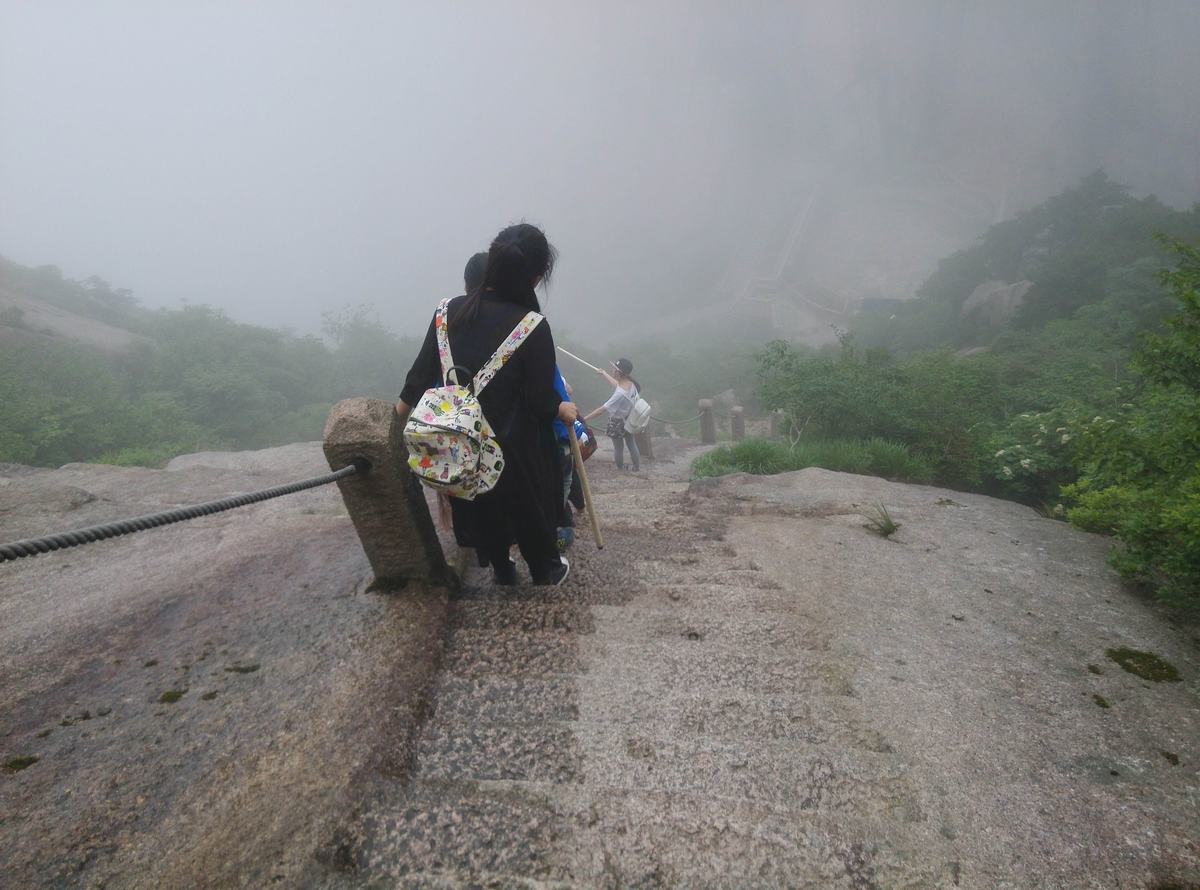
The Eastern Steps (云谷寺步道 / 东大门步道) – The Gentler Approach
The Eastern Steps begin at Yungu Temple (Cloud Valley Temple) , at an elevation of approximately 730 meters. The trail ascends northward past Bai‘e Ridge (White Goose Ridge) , continues to Shixin Peak (Beginning‑to‑Believe Peak) , and eventually reaches the mist‑filled valleys of Beihai (North Sea Scenic Area) .
What You‘ll See Along the Way
Jade Valley (翡翠谷): One of the route’s highlights, this valley receives alpine runoff from Liandan Peak and Shixin Peak. It features scores of small, colorful crystalline pools that shimmer in shades of emerald and jade — a favorite spot for photographers.
Shixin Peak (Beginning‑to‑Believe Peak): The name comes from a famous legend: a skeptical visitor who doubted the tales of Huangshan‘s beauty climbed this peak and was instantly converted. Today, it’s renowned for its ancient, twisted pines — locals say “without seeing Shixin Peak, you haven‘t truly seen Huangshan’s pines.”
Black Tiger Pine (黑虎松): One of Huangshan‘s most famous ancient pines, located along the trail near Shixin Peak.
Beihai Scenic Area: The trail ends at the North Sea area, where you can continue to Lion Peak (“Monkey Watching the Sea”), Paiyun Pavilion, and Bright Summit.
Eastern Steps Practical Notes
| Detail | Information |
|---|---|
| Starting Point Access | From South Gate (Tangkou), take the scenic shuttle (¥19) to Yungu Temple cable car station. The trailhead is adjacent to the cable car station. |
| Alternative Starting Point (NEW for 2026) | You can also start from the East Gate (东大门) , which opened on June 11, 2026. From the East Gate, take the new East Sea Cableway (东海索道) — 6,638 meters long, 25–30 minutes one‑way — to reach the trail network. Note: There is currently no hiking trail from the East Gate to the cableway upper station — the cableway is the only way in or out of this area. |
| Difficulty | This route is less strenuous than the Western Steps, making it a popular choice for first‑time hikers and families. |
| Cable Car Shortcut | If you‘d rather skip the hike, take the Yungu Cableway (¥80 one‑way, ~8 minutes) from Yungu Temple to Bai’e Ridge. |
The Western Steps (慈光阁步道) – The Dramatic Challenge
The Western Steps pass through some of China‘s most jaw‑droppingly beautiful scenery. The trail meanders past a series of iconic peaks — Celestial Capital (Tiandu), Jade Screen (Yuping), Lotus Flower (Lianhua), and Bright Summit (Guangming Ding) — en route to the distinctive Flying‑over Rock (Feilai Shi) and the West Sea (Xihai) , with its early morning views of clouds filling rugged valleys.
What You‘ll See Along the Way
The Iconic Peaks: The Western Steps take you past Huangshan’s most famous summits. Lotus Peak (1,864 m) — the highest point on the mountain — is open in 2026 after a five‑year closure. Tiandu Peak (1,810 m) — the steepest and most thrilling peak — is also open with reservation (max 3,000 visitors per day).
Flying‑over Rock (飞来石): A massive stone block balancing precariously on an outcropping — one of Huangshan‘s most photographed “strange rocks.”
Love Locks: Along the way, you‘ll encounter countless engraved padlocks fastened to railings by lovers who have followed the custom of consecrating their attachment by leaving a symbol hanging in the mists of one of China’s most romantic landscapes. You can purchase locks on site if so inclined.
West Sea Grand Canyon: Near the northern end of the trail, you can detour into the West Sea Grand Canyon — a fantastical scenic area with cliff‑hanging plank walkways, deep ravines, and the popular “Little Train” (canyon rail) that carries visitors back up from the valley floor.
Western Steps Practical Notes
| Detail | Information |
|---|---|
| Starting Point Access | From South Gate (Tangkou), take the scenic shuttle (¥19) to Ciguang Pavilion. The trailhead begins here. |
| Difficulty | This route is significantly more strenuous than the Eastern Steps, with steeper grades and longer distances. Allow 5–6 hours at a moderate pace. |
| Refreshments | You can pick up snacks and drinks along the way, whether in hotel restaurants or from vendors. |
| Cable Car Shortcut | Take the Yuping Cableway (¥90 one‑way, ~8 minutes) from Ciguang Pavilion to Yupinglou. |
The Peak Circuit – Connecting the Two Trails
At the summit, the Eastern and Western Steps connect via the Peak Circuit, a relatively flat ridge‑top trail that allows you to hike from one side of the mountain to the other without descending. This is the route used by most hikers doing a one‑day traverse: ascend one side, cross the summit, and descend the other.
Key junctions on the Peak Circuit:
| Junction | What‘s Nearby |
|---|---|
| Bai’e Ridge | Eastern Steps trailhead (upper station) |
| Beihai Hotel area | Lion Peak, Monkey Watching the Sea, Shixin Peak |
| Paiyun Pavilion | West Sea Grand Canyon entrance, sunset views |
| Bright Summit | Highest point on the circuit (1,860 m), sunrise/sunset hotspot |
| Yupinglou | Welcoming Pine, Western Steps trailhead (upper station) |

The West Sea Grand Canyon – A Must‑See Detour
The West Sea Grand Canyon (西海大峡谷) is often described as Huangshan‘s most梦幻 (fantastical) scenic area. It features cliff‑hanging plank walkways that offer vertigo‑inducing views of deep ravines, strange rock formations, and ever‑changing cloudscapes.
How to experience it:
| Option | Route | Time | Best For |
|---|---|---|---|
| Full descent + “Little Train” up | Descend from Paiyun Pavilion or Tianhai through loops 1 & 2 to the valley bottom, then take the canyon rail back up (¥100) | 2–3 hours | Hikers with good fitness who want the full experience |
| Loops only (no valley bottom) | Walk loops 1 & 2 from Paiyun Pavilion, then return the same way | 1–2 hours | Those with limited stamina or time |
| “Little Train” only | Take the rail down and up without hiking the loops | ~30 min | Sightseers, families with young children |
2026 Opening Status: The West Sea Grand Canyon is open from March to November and closes for winter maintenance from December to mid‑March. In 2026, it reopened on March 14.
* Warning: Hiking the entire canyon floor involves over ten thousand steps and can easily exhaust your energy. The “Little Train” is highly recommended for the return trip.
The New East Gate (2026) – A Brand‑New Entry Point
On June 11, 2026, Huangshan‘s East Gate (东大门) officially opened, marking the first time in the mountain’s history that all four gates — South, North, West, and East — are simultaneously accessible.
Key facts about the East Gate:
| Feature | Detail |
|---|---|
| Location | Tanqiao Town, Huangshan District |
| Cableway | East Sea Cableway (东海索道) — 6,638 meters long, 25–30 minutes one‑way |
| Capacity | 2,100 passengers per hour, 8 passengers per cabin |
| Trail | 1.4 km cliff‑side “Xuanyun Plank Road” (轩辕云道) featuring 10 named attractions |
| Hiking Trail | None — the cableway is the only way in or out of this area |
| Promotional Price | 252 RMB (20% off) for entrance + cableway up, June 11 – July 10, 2026 |
Why choose the East Gate?
• No shuttle bus required — unlike the South Gate, you don‘t need to transfer from a parking lot to a cable car station
• Brand‑new scenery — the East Sea Scenic Area features low mountains, valleys, streams, and waterfalls
• Crowd relief — helps distribute visitor flow away from the often‑congested South Gate
Sample Itineraries Using the Steps
One‑Day Classic Traverse (Most Popular)
Route: South Gate → Shuttle to Yungu Temple → Eastern Steps up (or Yungu Cableway) → Bai‘e Ridge → Shixin Peak → Beihai → Paiyun Pavilion → Bright Summit → Yupinglou → Western Steps down (or Yuping Cableway) → Shuttle back to South Gate
| Time | Activity |
|---|---|
| 6:30 AM | Arrive at South Gate, take shuttle to Yungu Temple |
| 7:00 – 8:00 AM | Eastern Steps up (or cableway) to Bai‘e Ridge |
| 8:00 – 10:00 AM | Shixin Peak → Lion Peak → Beihai area |
| 10:00 – 12:00 PM | Paiyun Pavilion → West Sea Grand Canyon (loops) → Bright Summit |
| 12:00 – 2:00 PM | Bright Summit → Flying‑over Rock → Yupinglou |
| 2:00 – 3:00 PM | Western Steps down (or cableway) to Ciguang Pavilion |
| 3:30 PM | Shuttle back to South Gate |
Total hiking time: ~5–6 hours (plus cable car options)
Two‑Day Itinerary (Sunrise & Sunset)
Day 1: South Gate → Shuttle to Yungu Temple → Eastern Steps up (or cableway) → Shixin Peak → Lion Peak → Beihai → Paiyun Pavilion → West Sea Grand Canyon (descend loops) → “Little Train” up → Bright Summit (sunset) → Overnight at summit hotel
Day 2: Sunrise at Bright Summit → Flying‑over Rock → Yupinglou → Welcoming Pine → Western Steps down (or cableway) → Shuttle back to South Gate
Practical Hiking Tips for 2026
| Tip | Details |
|---|---|
| Book everything in advance | All tickets must be booked through the “Huangshan Tourism Official Platform” WeChat mini‑program. On‑site sales are no longer available. |
| Hiking entrance closes at 15:00 | After 3:00 PM, only exit is allowed. |
| Ticket validity | One ticket is valid for 3 days with re‑entry allowed. |
| Peak reservations required | Tiandu Peak requires advance reservation (max 3,000/day). Lotus Peak is open but may have capacity limits. |
| Wear proper footwear | Non‑slip hiking shoes are essential — trails can be wet and slippery. |
| Bring a raincoat | Umbrellas are useless in mountain winds. |
| Pack layers | Summit temperatures can be 8–10°C cooler than the base. |
| Carry water and snacks | Refreshments are available but expensive on the mountain. |
| Hiking poles | Highly recommended for the thousands of stairs — cheap ones are available at the base. |
| Check cable car schedules | Last cars down are typically between 16:00 and 17:40 depending on season. |
Summary: Which Route Should You Choose?
| Your Profile | Recommended Route |
|---|---|
| First‑time visitor, moderate fitness | Eastern Steps up (gentler), traverse the Peak Circuit, Western Steps down (or cableway) |
| Experienced hiker, seeking challenge | Western Steps up (more dramatic), traverse, Eastern Steps down |
| Short on time / limited fitness | Cableway up one side, walk the summit circuit, cableway down the other side |
| Avoiding crowds / trying something new | East Gate (new in 2026) → East Sea Cableway → connect to trail network |
| West Sea Grand Canyon focus | Enter via Paiyun Pavilion, descend loops, take “Little Train” up — no need to hike the full Western or Eastern Steps |
Whether you choose the gentler Eastern Steps, the dramatic Western Steps, or the brand‑new East Gate route, hiking Mount Huangshan is an experience that will stay with you forever. The mountain‘s ancient stone stairways have welcomed pilgrims, poets, and travelers for over a thousand years — and in 2026, with new routes and reopened peaks, there’s never been a better time to walk in their footsteps.
More Recommend
- Huangshan Sunset Guide
- Huangshan Sunrise Guide
- Huangshan North Railway Station
- How to Get to Huangshan
- Hangzhou to Huangshan High Speed Train
- Huangshan Festivals and Events
- Huangshan Summit Hotels Guide
- How to Get from Shanghai to Huangshan
- Huangshan to Shanghai High Speed Train
- Shanghai to Huangshan High Speed Train


