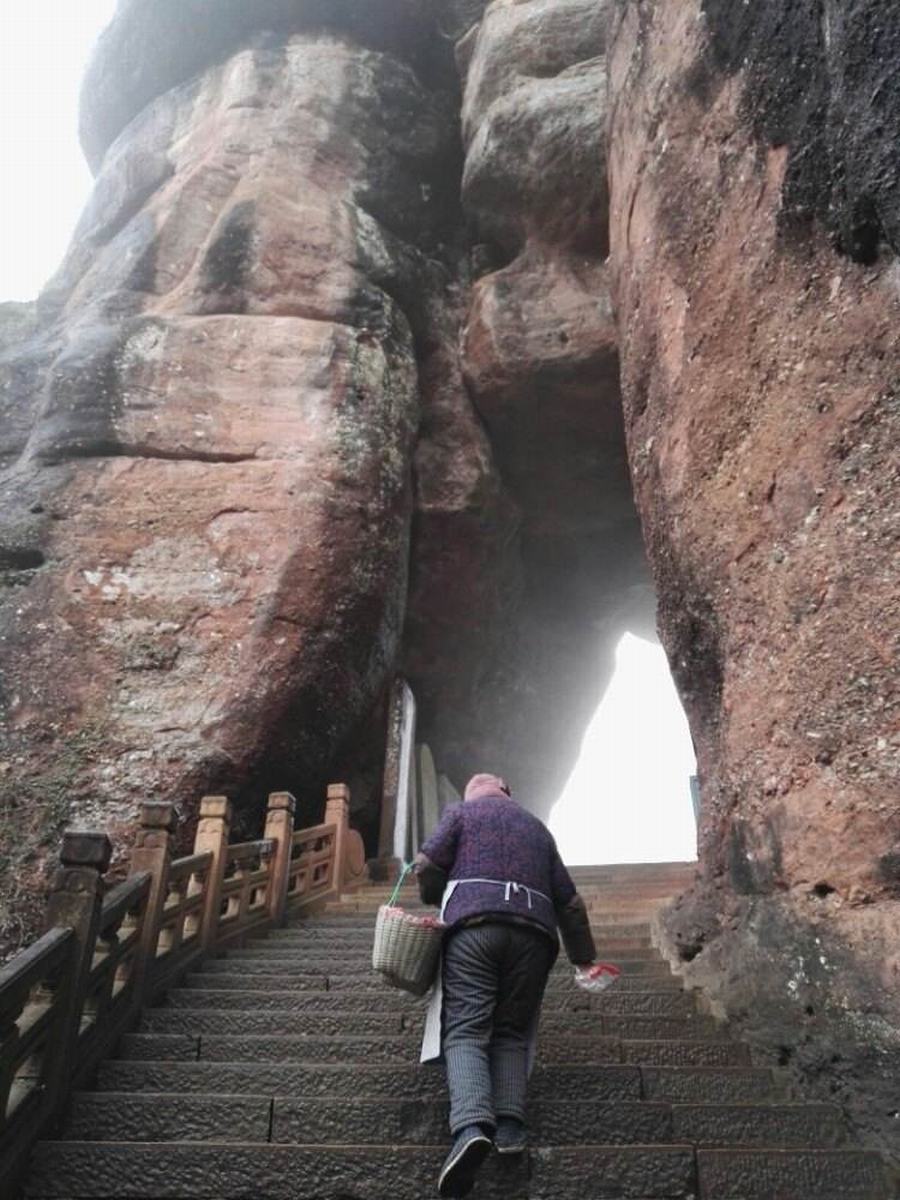
Qiyun Mountain
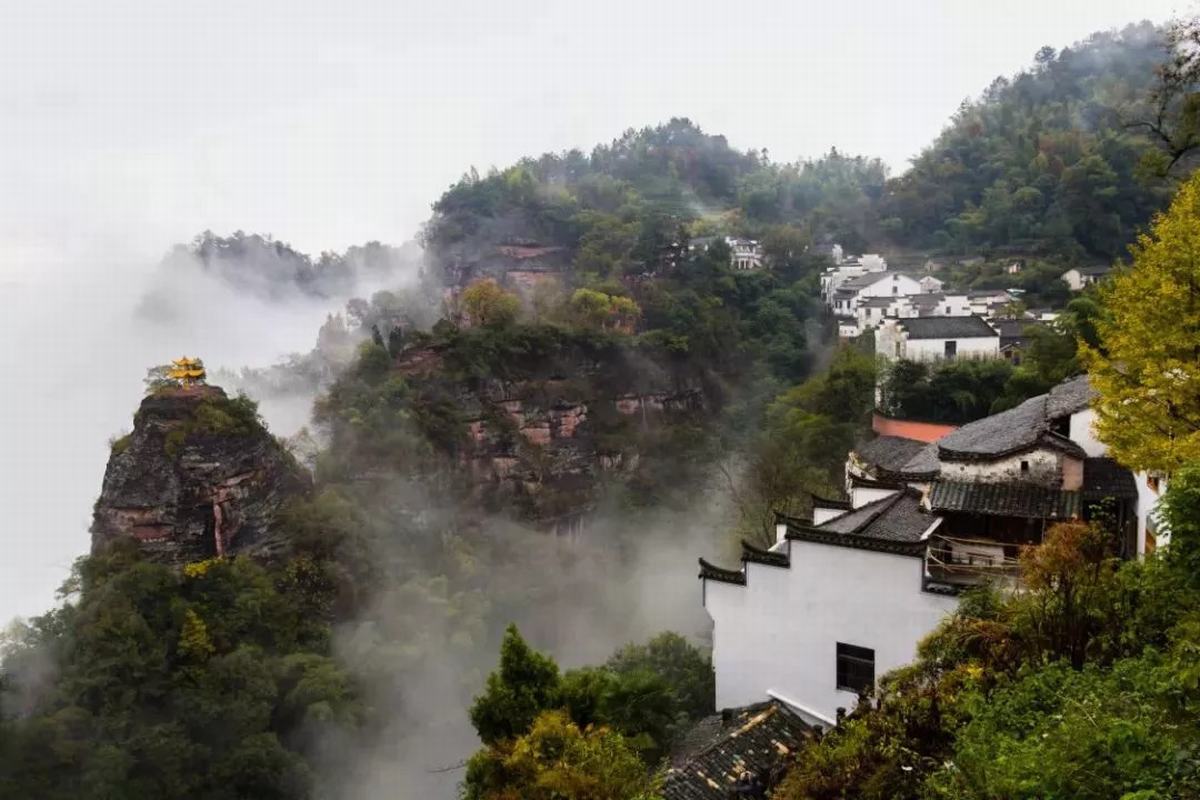
Located approximately 33 kilometers northwest of Huangshan City, at the foot of the Huangshan mountain range, Mount Qiyun (Qiyun Mountain) is revered as one of the Four Sacred Mountains of Taoism in China. Originally named White Mountain, its current name "Qiyun" means "as high as the clouds" – a reference to its towering stone peaks that seem to pierce the sky.
A Mountain Blessed by Emperors
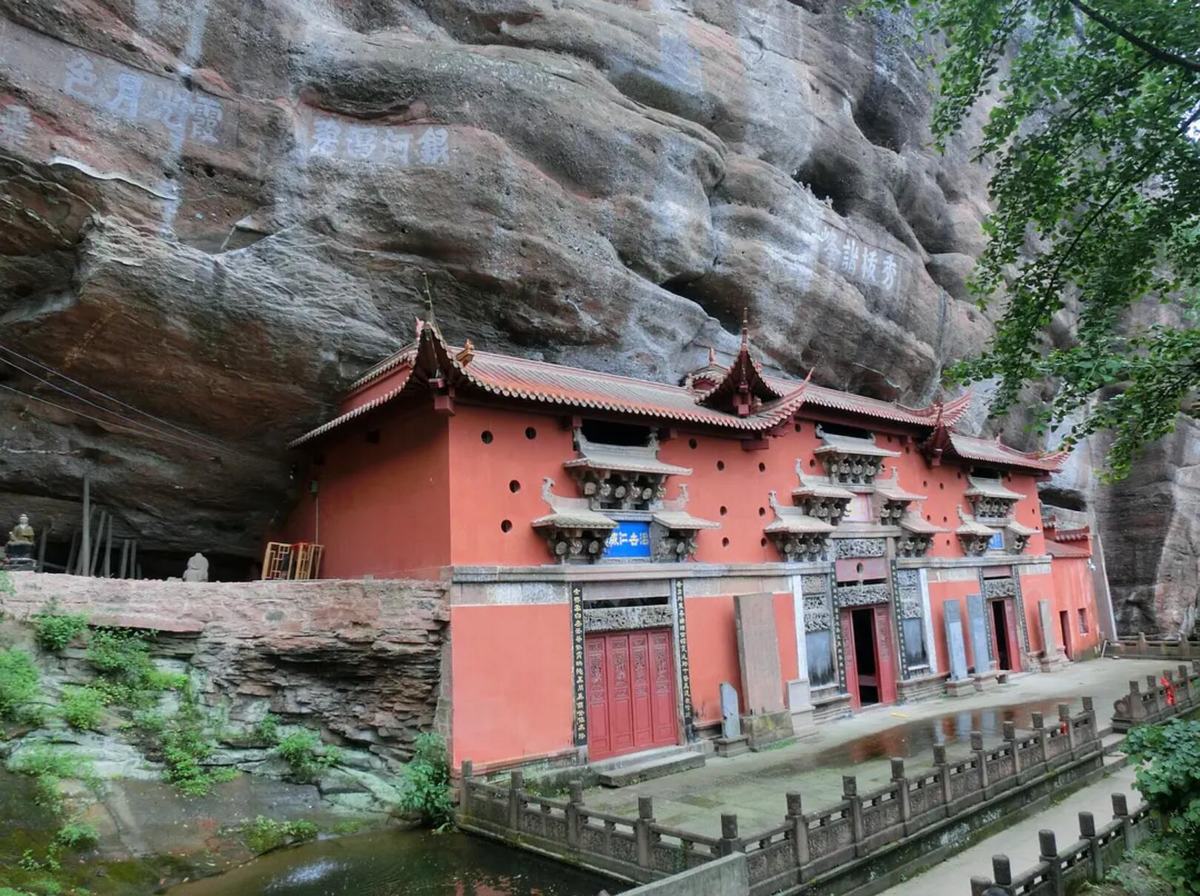
According to the Record of Mount Qiyun, Emperor Jiajing of the Ming Dynasty was granted a son after praying at the mountain. In gratitude, he ordered the construction of the Xuantian Taisu Palace beneath the great Qiyun Rock, officially bestowing the mountain its present name. Later, Emperor Qianlong of the Qing Dynasty praised Mount Qiyun as the "Unique Scene" and "First Mountain of the Southern Yangtze Region."
Danxia Landform & Scenic Wonders
Mount Qiyun is renowned for its Danxia landform (red sandstone cliffs), steep peaks, clear waters, oddly shaped rocks, and tranquil caves. The mountain spans 16 km from east to west and 6.9 km from north to south, and is divided into four scenic sections: Yuehua Street, Yunyan Lake, Loushanlou Building, and the Hengjiang River banks.
Key attractions include:
•36 steep peaks
•44 oddly shaped rocks
•18 tranquil caves
•27 waterfall-fed springs
•14 pools
•16 pavilions and terraces
•537 cliff inscriptions and stone tablets
•3 decorated stone archways
•5 stone bridges
•33 temples and nunneries
Xianglu Peak (Incense Burner Peak)
Located in front of the Taisu Palace on Yuehua Street, this peak rises tall in the shape of an ancient incense burner, hence its name.
Caves of Fairies and Immortals
Beneath the cliffs lie many caves enshrining various deities. Notable caves include:
| Cave | Enshrined Deity |
|---|---|
| Eight-Immortal Cave | The Eight Taoist Immortals |
| Yuantong Cave | Nanhai Kwan-yin Buddha |
| Arhat Cave | Zhenwu Dijun (Emperor of the North) + 18 arhats |
| Yujun Cave | Dragon King |
| Wenchang Cave | Wenqu Star (God of Literature) |
These caves beautifully illustrate the integration of Buddhism, Taoism, and Confucianism – a unique cultural feature of Mount Qiyun.
Fascinating Places & Happy Lands (Three Cliff Inscriptions)
•Qizhen Cliff – said to be the cultivation site of Qixia Immortal (Tang Dynasty)
•Zhonglie Cliff – a place to honor Guangong Immortal
•Shouzi Cliff (Longevity Cliff) – features a giant Chinese character "Shou" (Longevity) , 230 cm in diameter, handwritten by Dowager Empress Cixi of the Qing Dynasty
Beyond Shouzi Cliff, visitors can pass through a naturally formed stone hollow known as the No. 1 Heaven Gate, which contains numerous stone inscriptions and tablets – often called the Baiyue Stele Forest.
Easy Access & Visitor Info
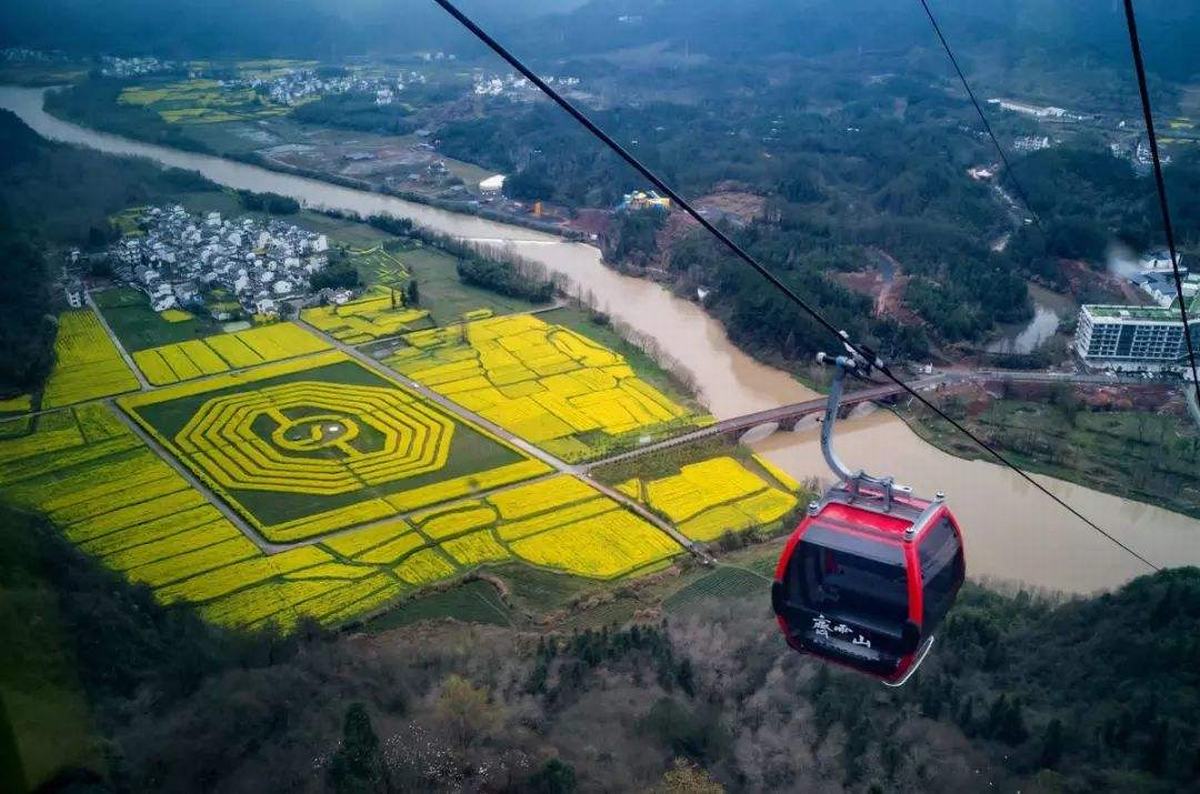
Mount Qiyun is not high – its highest point reaches only 585 meters above sea level. A cable car takes visitors to the top in just a few minutes, making it accessible to all ages and fitness levels.
Why Visit Mount Qiyun?
•One of China's Four Sacred Taoist Mountains (alongside Mount Longhu, Mount Qingcheng, and Mount Wudang)
•Less crowded than nearby Huangshan, yet rich in culture and natural beauty
•Breathtaking Danxia red cliffs – a striking contrast to the granite peaks of Huangshan
•Over 500 cliff inscriptions – a paradise for history and calligraphy lovers
•Unique religious harmony of Taoism, Buddhism, and Confucianism in one site
As the ancient saying goes: "Huangshan and Baiyun (Qiyun) mountains stand confronting each other – one can never enjoy enough of their beauty."
Whether you are a Taoist culture enthusiast, a hiker, or a traveler seeking hidden gems near Huangshan, Mount Qiyun offers an unforgettable journey into China's sacred mountain heritage.